

Customer Happiness: The Next Competitive Advantage for Banks
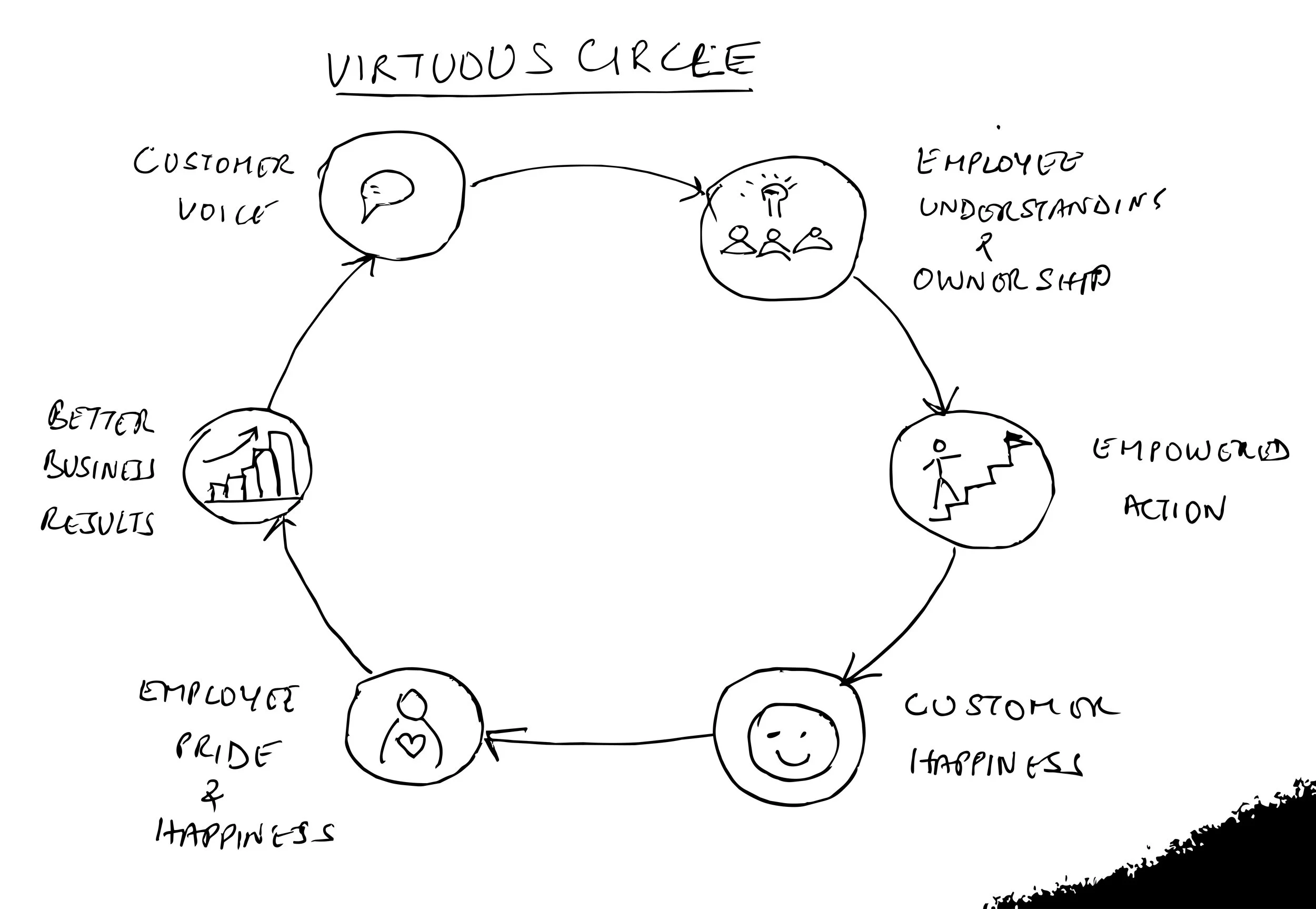
The magic of connecting customer happiness to employee happiness.
Recently, the Customer Experience head of a large financial services business came to us with a very real concern:
“We collect customer feedback at different touchpoints. We track KPIs, TATs and service metrics. But we don’t feel customer delight is really improving. Nor are we seeing the impact in loyalty, market share or growth. What is happening?”
This is not unusual.
Over the last few years, many organisations have become much better at collecting customer feedback.
After a flight, hotel stay, banking transaction, service interaction, etc.
Digital tools have made it easier to ask, collect, analyse and dashboard customer feedback.With AI, this will only get better.
But the real question is different.
Are customers FEELING more heard?
Are employees feeling more empowered?
Our experience suggests that the answer depends on how feedback is used inside the organisation.
In many companies, feedback becomes mechanical.
Complaint raised ->Ticket created->Action prescribed -> Employee completes action->Ticket closed.
While this is better than no response, it may not create real customer delight.
The more powerful approach is more HUMAN (Bain & Company) have designed this system and proved its effectiveness)
First, employees should directly hear the voice of the customer — not just a score, dashboard or summary.
The customer’s actual words (and ideally voice!) matter. They reduce defensiveness, build trust and make the issue REAL.
In one retail business, the morning team meeting began with employees listening to two customer feedback calls.
In a B2B chemicals business, factory workers could listen to any customer feedback via an iPad placed on the shopfloor.
The message was powerful: we trust you with the customer’s voice.
Second, employees should discuss the feedback in teams, ideally cross-functionally.
Not to assign blame, but to understand root causes and decide what should change. This breaks silos & prevents the common problem where everyone is individually doing their job- but the customer experiences collective failure.
Third, positive feedback should be used as powerfully as negative feedback: Customer feedback is not only about complaints. Very often, it captures moments where an employee has done something special. When employees hear that they made a customer happy, and when the organisation recognises them for it, it can be one of the strongest motivators for better performance!
At RedVent, we believe customer feedback should become a motivation system, a learning system, a trust-building system- not just a measurement system.
CEOs who institutionalise this human process as seriously as they institutionalise feedback technology are more likely to see the real magic:
Happier customers --> More energised employees--> Better business results.
#CustomerExperience #CustomerHappiness #CEO #NPS #CustomerValue #Leadership #BusinessGrowth #RedVent
